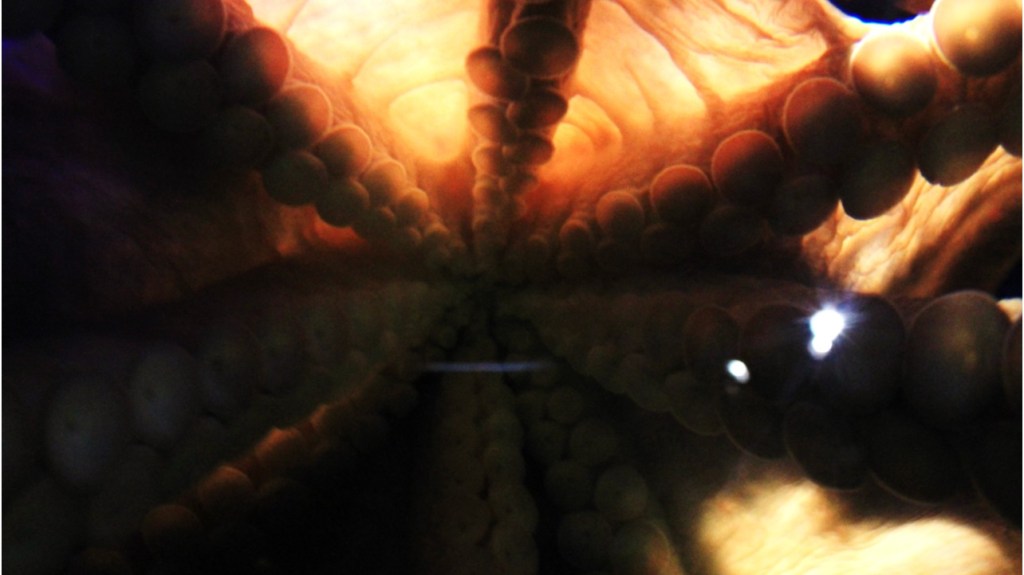
In Episode 7 we talk about the recent boom in octopus populations around the UK coast, and the ecological reasons behind this. Some ecologists suggest that this could be a sign of improved habitat conditions. However, evidence from the fossil records suggest that cephalopod numbers surge at the end of mass extinction events. Scientists have been warning for years that we are undergoing the 6th mass extinction of life on earth. Does the octopocalypse provide evidence for this?
Dr. Bryce Stewart
Dr. Bryce Stewart is a senior research fellow at the Marine Biological Association in Plymouth, England. He is a marine ecologist and fisheries biologist whose work has ranged from temperate coastal waters to tropical coral reefs and the deep sea. In 2026 he published a paper investigating the ecological causes of the octopus bloom.
Professor Peter Ward
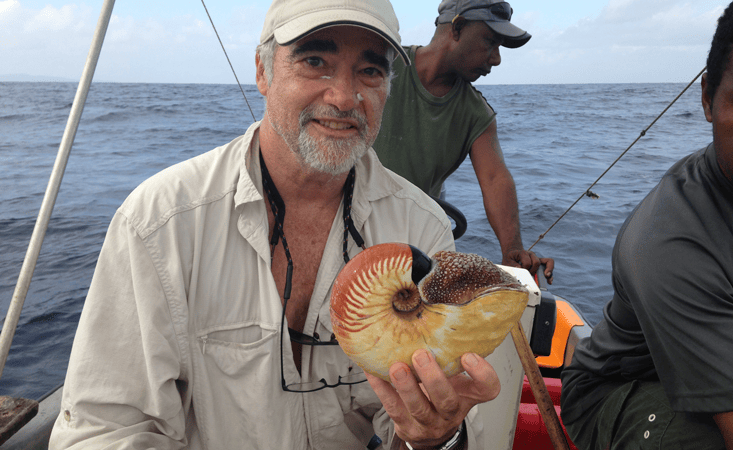
Professor Peter Ward is a Professor of Biology and Earth and Space sciences at the University of Washington. He is widely recognised for his work on cephalopods, in particular, nautilus, and mass extinctions. He has authored many books including On Methusela’s Trail, The End of Evolution, Rare Earth; Why complex life is uncommon in the universe, Under a Green Sky: Global Warming, the Mass Extinctions of the Past, and What They Can Tell Us About Our Future. In this episode, we discuss Peters recent article, The Cepaholopods are Coming, which describes how the fossil records show us that past mass extinction events have been characterised by huge blooms of cephalopod populaations, and why Peter believed this could be happening again.

The 2025/2026 octopus bloom
Peter’s nautilus adventures
Further reading
Global proliferation of cephalopods
IPBES Global Assessment Report on Biodiversity and Ecosystem Services
Half a century of global decline in oceanic sharks and rays
Stock assessment models overstate sustainability of the world’s fisheries


Leave a Reply